Trane Gas Furnaces in Pasadena
Trane models desk - updated 2026-06-13
Quick answer: Pasadena Trane HVAC services and installs Trane gas furnaces across Pasadena ZIPs 91101 through 91107, with replacements running about $3,000 to $7,500 - so call (213) 277-6575 or book online. The 80% XR80, two-stage S9V2, and modulating XC95m suit our mild Zone 9 winters, and we diagnose by the control board's LED flash code.
At a glance
- Trane furnace lines: XR80/XV80 (80%), S9X2 and S9V2 (~96%), XV95 (~97%), XC95m (modulating, ~97.3% AFUE).
- In mild Pasadena, the 80% tier is frequently adequate; condensing models pay back slowly.
- Diagnosed by integrated furnace control LED flash code (2-9 flashes).
- Common parts: hot-surface igniter, flame sensor, inducer, pressure switch, high-limit, gas valve.
- Furnace replacement $3,000-$7,500 in 2026 SoCal (80% value to modulating high end).
- Service ZIPs 91101-91107. Hours: Open 6:30am-8pm weekdays, 8am-5pm weekends.
- Independent - not a Trane dealer.
Which Trane furnace tier makes sense in Pasadena?
Heating is the smaller half of the job here. Pasadena's Zone 9 winters are short, so the efficiency premium of a condensing furnace returns slowly compared with a cold climate. We help homeowners pick the tier honestly: the 80% line for most, a two-stage S9V2 where comfort and airflow matter, and the modulating XC95m only where the heating hours justify it.
| Model | AFUE | Trait | Installed lane |
|---|---|---|---|
| XR80 / XV80 | ~80% | Value, adequate for mild winters | $3,000 - $5,000 |
| S9X2 / S9V2 | ~96% | Two-stage; S9V2 adds variable-speed ECM | $4,500 - $6,500 |
| XV95 / XC95m | ~97% / 97.3% | Variable-speed and modulating comfort | $5,500 - $7,500 |
How do we diagnose a Trane furnace fault?
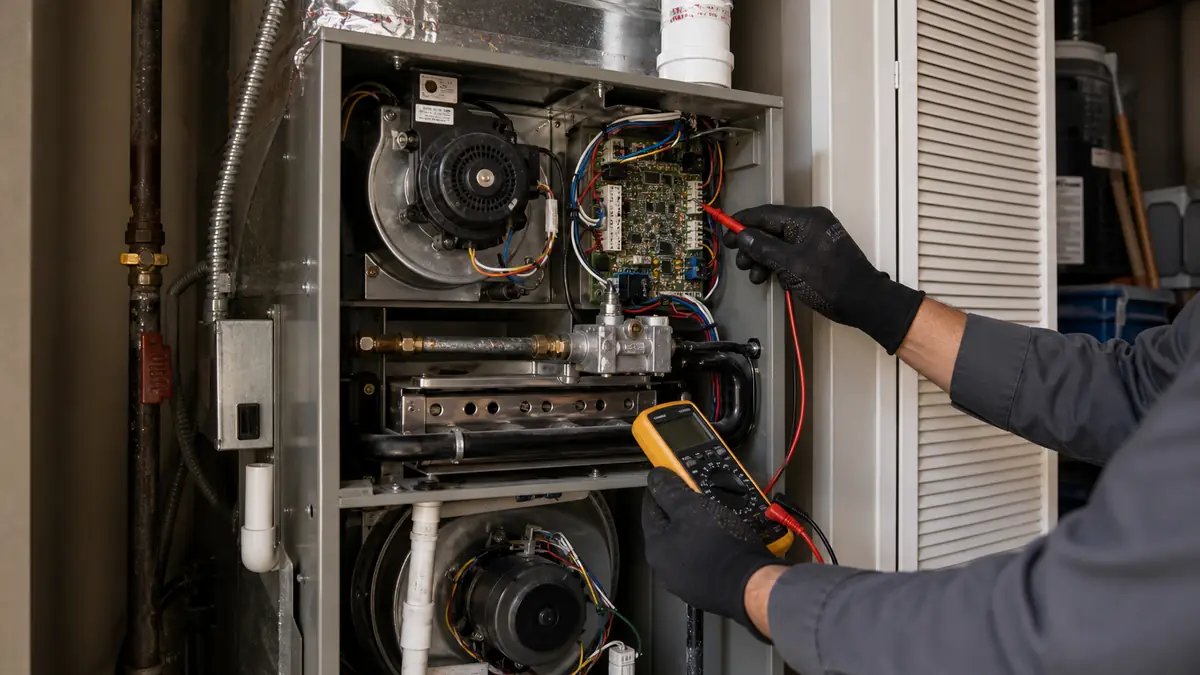
Every Trane furnace has an integrated furnace control with a status LED. We count the flash code first: 2 flashes is an ignition lockout, 3 is a pressure-switch or venting fault, 4 is an open high-limit on low airflow, 8 is a weak flame-sense signal. The code narrows it; a meter confirms it. On communicating systems, the XL824 or XL850 shows a plain-language alert too. Full code table on the furnace repair page.
What do the Trane furnace flash codes mean?
The integrated furnace control stores a fault as a flash count on its status LED. Reading it first saves diagnostic time and your money - the code names the subsystem, then a meter confirms the part.
| Flashes | Meaning | Likely component |
|---|---|---|
| 2 | System lockout (ignition retries exceeded) | Igniter, flame sensor |
| 3 | Vent / pressure-switch error | Inducer, flue, pressure switch |
| 4 | Open high-temperature limit | Dirty filter/coil, blower, ducts |
| 5 | Flame sensed when none should be | Gas valve leak-by, control board |
| 6 | Reversed 115VAC polarity / grounding | Wiring, outlet |
| 7 | Gas valve circuit error | Gas valve, wiring |
| 8 | Low flame-sense signal | Carboned flame sensor |
| 9 | Igniter circuit / polarity fault | Hot-surface igniter |
A 4-flash high-limit is the code we see most in Pasadena, and the furnace is usually fine - it is overheating because undersized retrofit ducts or a dirty AC coil are choking airflow. The full repair walkthrough lives on the furnace repair page.
What does California code change about a furnace install?
Two code realities shape any Pasadena change-out. First, California air districts regulate furnace NOx emissions, so a replacement may need a Low-NOx or Ultra-Low-NOx model depending on the install. Second, the jump from an 80% atmospheric furnace to a condensing 95%-plus unit changes the venting: condensing furnaces use sealed combustion with PVC venting and produce acidic condensate that needs a drain, which is not a trivial retrofit in a tight 1920s closet or basement. We confirm the model, the vent path, and the condensate route meet current code before the job - not when the inspector arrives. That is part of why the 80% tier remains the practical choice for so many homes here.
Which Trane furnace is right for your home?
The decision is mostly about heating hours and venting. For the typical Pasadena home with a short, mild heating season, an 80% XR80 or XV80 is adequate and the cheapest to install and keep running. Step up to a two-stage S9V2 when you want quieter, steadier heat and a variable-speed ECM that also improves cooling-mode airflow - a sensible pairing with a variable-speed AC or heat pump. Reserve the modulating XC95m for the rare local home that genuinely runs many heating hours, since its efficiency premium pays back slowly in Zone 9. We size by your real heating load and recommend the tier honestly rather than defaulting to the most expensive box.
What about the AC coil sitting on the furnace?
In a typical Pasadena split system, the evaporator coil sits in the supply plenum above the furnace, and the furnace blower moves air for both heating and cooling. That is why a furnace high-limit trip often traces to a dirty AC coil or undersized ducts choking airflow. We treat the furnace, blower, coil, and ductwork as one air system, not separate boxes. A clogged filter is the single most common starting point, since it raises static pressure on the whole air path and starves both modes at once.
What keeps a Trane furnace safe and efficient here?
Because Pasadena furnaces sit idle through the long cooling season, the first cold morning is when faults surface - so a pre-winter check matters more than the short run time suggests. We clean and test the flame sensor (a carboned sensor is the top cause of a furnace that lights then drops out), confirm the hot-surface igniter's resistance, verify the pressure switch and inducer draw, and on condensing models clear the condensate drain that can back up and lock the unit out. On any atmospheric or 80% furnace we also check the heat exchanger and combustion for safe operation, because a cracked exchanger is a carbon-monoxide concern, not a comfort one. Catching a $150 flame sensor or igniter in November beats a no-heat call on the coldest night of the year.
Common questions about Trane gas furnaces in Pasadena
Do I need a 95% furnace in Pasadena, or is 80% enough?
For most Pasadena homes, an 80% AFUE Trane furnace (the XR80/XV80 tier) is adequate because our heating season is short and mild. A condensing 95%-plus furnace like the XC95m saves real money only where the furnace runs many hours, which is rare here. We size by your heating hours, not a sales target.
What is the difference between S9X2 and S9V2?
Both are Trane furnaces around 96% AFUE. The S9X2 is two-stage with a constant-torque ECM blower; the S9V2 adds a true variable-speed ECM for quieter operation and better airflow control, which pairs well with a variable-speed AC or heat pump.
Why does my Trane furnace need a Low NOx or sealed-combustion model in California?
California air districts regulate furnace NOx emissions, and condensing furnaces use sealed combustion with PVC venting. When we replace an older atmospheric furnace in Pasadena, we confirm the new unit and its venting meet current code, which sometimes affects the model and the install path.
How long does a Trane furnace last in Pasadena?
Because the heating season is short here, Pasadena furnaces often outlast the national average, commonly reaching 18 to 20-plus years with annual service. The parts that fail first are the consumables - flame sensor, igniter, and pressure switch - which are inexpensive to replace and keep an older furnace running safely.
Should I replace my furnace and AC at the same time?
If both are old and the budget allows, often yes. The coil and furnace share one plenum and one blower, so matching a new variable-speed AC to a new variable-speed S9V2 furnace lets the system stage together. But we do not force it - if your furnace is sound, we will install the AC and leave the furnace alone.