Trane AC Installation in Pasadena
Installation desk - updated 2026-06-13
Quick answer: Pasadena Trane HVAC installs right-sized Trane air conditioners across Pasadena ZIPs 91101 through 91107 for about $5,000 to $12,000, Manual-J sizing XR single-stage and XV variable-speed condensers - so call (213) 277-6575 or book online for a quote. We match the coil to your blower and finish with Title-24 refrigerant-charge and airflow verification. If your current system can still be saved, start with Trane AC repair instead.
At a glance
- Central AC replacement (condenser + coil) typically $5,000 - $12,000 in 2026 SoCal - XR value low, XV20i premium high.
- We size by Manual J, not square footage, so the system is not oversized.
- Trane Spine Fin all-aluminum coil resists corrosion and has fewer leak points than copper-aluminum designs.
- New systems use R-410A or current low-GWP refrigerant per model year.
- Every install includes a City of Pasadena permit and HERS verification.
- Service area: 91101, 91103, 91104, 91105, 91106, 91107. Hours: Open 6:30am-8pm weekdays, 8am-5pm weekends.
- Independent shop - not a Trane dealer.
Which Trane AC tier fits a Pasadena home?
Pasadena's cooling-dominant Zone 9 climate rewards efficiency, but the right tier depends on your runtime and budget. The single-stage XR line is the durable, widely stocked workhorse; the two-stage XL and variable-speed XV deliver tighter temperature control and quieter operation for homes that run the AC hard from June through October.
| Trane line | Stage / efficiency | Best for | Installed lane |
|---|---|---|---|
| XR13 / XR14 / XR16 | Single-stage, value SEER2 | Tight budgets, mild-runtime homes | $5,000 - $8,500 |
| XL-series | Two-stage Climatuff | Balanced comfort and bills | $7,000 - $10,500 |
| XV18 / XV20i (4TTV8 / 4TTV0) | Variable-speed, up to ~20.5 SEER2 | Long cooling hours, quiet, even temps | $9,000 - $12,000+ |
Pair any variable-speed condenser with an XL824 or XL850 ComfortLink II control to unlock its staging - without the communicating thermostat the unit runs like a single-stage and you lose what you paid for.
Why does sizing matter more than horsepower here?
An oversized AC is the most common installation mistake we find in Pasadena. It cools the air fast, satisfies the thermostat, and shuts off before it pulls humidity out, so the house feels clammy and the compressor short-cycles toward an early failure. We run a load calculation that weighs your home's actual envelope - lath-and-plaster walls, attic insulation depth, west-facing glass, and the foothill heat soak - and usually land a half to a full ton smaller than the unit being replaced. Read the Manual J sizing guide for the full method.
What does the historic housing stock change about an install?
In Bungalow Heaven and the other landmark districts, the outdoor unit often cannot sit where it is easiest. Design guidelines push condensers and line sets out of the street view, and 1900-1930 Craftsman homes rarely have return-duct space for a large central coil. Sometimes the answer is a slim XR matched to an existing ducted air handler; sometimes the honest answer is that a ductless or high-velocity retrofit serves the floor plan better than forcing central air. We tell you which before you commit.
What happens on install day?
- Recover the old refrigerant, pull the dead condenser and coil, and inspect the line set for the new charge type.
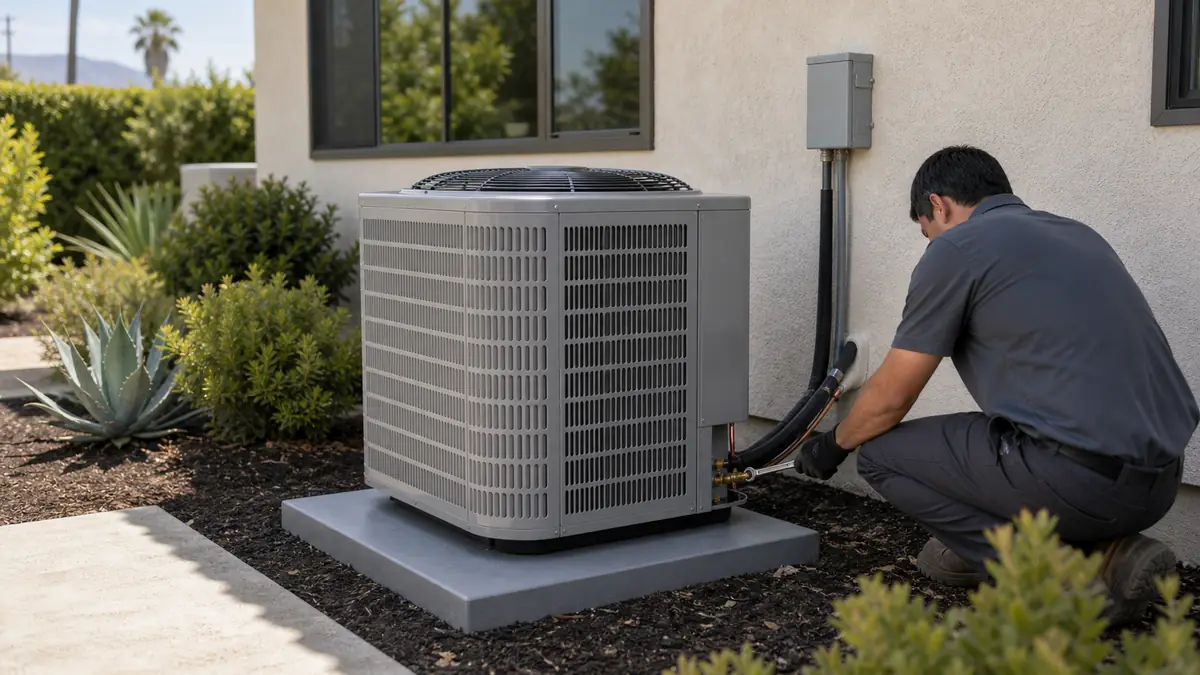
- Set the new Trane condenser on a level pad clear of historic-district sightlines, braze and pressure-test the line set.
- Match and seat the evaporator coil, wire the contactor and (if communicating) the ComfortLink II bus.
- Pull vacuum, weigh in the charge, then verify refrigerant charge and airflow for the HERS rater and the Pasadena permit.
How do you size a Trane AC for a Pasadena home?
Square footage is a starting guess, not the answer. We run a Manual J load calculation that weighs the envelope your home actually has, then round to the nearest half ton - usually landing smaller than the unit being replaced. These factors move the number most in Pasadena housing stock:
| Symptom or feature | What it signals | Effect on sizing |
|---|---|---|
| House feels clammy, AC short-cycles | Existing unit oversized | Drop a half to full ton |
| 1920s lath-and-plaster walls, little insulation | Higher conductive load | Adds load; weigh against shading |
| West-facing glass, foothill afternoon sun | High solar gain | Adds sensible cooling load |
| Attic insulation upgraded to R-38 | Lower ceiling gain | Reduces required tonnage |
| Undersized 1920s return ducts | Airflow ceiling on the system | Cap tonnage or seal/resize ducts first |
| Large San Rafael or Hastings Ranch footprint | Long cooling runtime | Favors variable-speed XV over single-stage |
What does a Pasadena AC install cost, and where does the money go?
A central AC change-out runs about $5,000 to $12,000 in 2026 SoCal, and the spread is real - it tracks the tier and the site work, not a markup. Here is how the number breaks down:
- The condenser and coil: the biggest line. A value XR sits at the low end; an XV20i variable-speed with its required ComfortLink II control sits near the top.
- Line set and refrigerant: reusing a clean line set saves money; a new run, or converting to a current low-GWP refrigerant, adds cost.
- Electrical: a dedicated circuit or a disconnect upgrade if the old service does not meet code.
- Permit and HERS verification: the City of Pasadena mechanical permit plus the third-party Title-24 charge and airflow test, typically $800 to $3,100 when paired with duct sealing.
- Access and historic-district placement: relocating a condenser out of a landmark-district street view, or reaching a coil in a cramped attic, adds labor.
None of those are upsells. They are the cost of installing to code in a city where the housing stock and the design guidelines complicate the work. If the existing ducts cannot deliver the new system's airflow, we flag duct sealing before you pay for SEER2 ratings the duct can never carry.
What protects a new install through Pasadena's long season?
A correctly sized Trane AC only earns its rating if the charge and airflow stay right, and our cooling-dominant Zone 9 climate puts long hours on a new system. Two habits matter most. First, the install itself: weighing in the exact refrigerant charge by the manufacturer's subcooling or superheat target, verified for the HERS rater, sets the baseline - an overcharged or undercharged system loses both efficiency and compressor life. Second, the Spine Fin coil needs to stay clean; foothill dust and the heat soak against the San Gabriels load the outdoor coil faster than a coastal home would see. Registering the unit with Trane at install locks in the longer parts warranty, which is the difference between a labor-only and a full-price Climatuff compressor repair years down the line. We handle the registration and document the commissioning numbers so the warranty and the rating both hold.
Common questions about Trane AC installation in Pasadena
What size Trane AC does a 1,500 sq ft Pasadena bungalow need?
Usually 2 to 3 tons, but square footage alone is a guess. We run a Manual J load calc that accounts for your 1920s wall construction, attic insulation, window count, and foothill afternoon sun. Most older Pasadena homes were oversized by the last installer, which causes short cycling and humidity swings.
Do I need a permit to install a new AC in Pasadena?
Yes. A condenser and coil change-out needs a City of Pasadena mechanical permit, and Title-24 requires HERS verification of refrigerant charge and airflow on the new split system. We pull the permit and schedule the third-party HERS rater as part of the install.
Can I keep my old furnace and just replace the AC?
Often yes, if the furnace blower can move the airflow the new coil needs. We check the blower type (PSC vs ECM) and static pressure first. A mismatched coil on a weak blower trips the high-limit and ices up, so we verify the pairing before quoting.
How long does a Pasadena AC install take?
A straight condenser-and-coil change-out is typically one day. Add time if the line set must be replaced, the electrical panel needs a circuit, or historic-district rules require relocating the outdoor unit out of street view.
Should I install an XR or step up to a variable-speed XV?
It depends on runtime. A modest-runtime bungalow is well served by a durable single-stage XR16 at the value end of the lane. A large home that runs cooling morning to night through our long season earns back an XV18 or XV20i through efficiency, quieter operation, and access to the higher utility rebate tiers that reward high SEER2.