Frozen Evaporator Coil on a Trane in Pasadena
Fixes desk - updated 2026-06-13
Quick answer: A Trane evaporator coil in Pasadena freezes from restricted airflow - a dirty coil, filter, or undersized duct - or from low refrigerant below about 32 F at the coil. Pasadena Trane HVAC measures superheat and airflow across Historic Highlands (91104) and Bungalow Heaven; call (213) 277-6575 or book online.
At a glance
- A frozen coil has only two root families: not enough airflow, or not enough refrigerant.
- Running a frozen system risks liquid slugging the Climatuff compressor - shut cooling off, run the fan.
- Airflow causes: dirty coil/filter, weak blower, undersized return or duct.
- Refrigerant causes: leak (often at the coil or line set), low charge.
- Fix lanes: airflow $150-$900; refrigerant leak + recharge $225-$1,500.
- Service ZIPs 91101-91107. Hours: Open 6:30am-8pm weekdays, 8am-5pm weekends.
- Independent - not a Trane dealer.
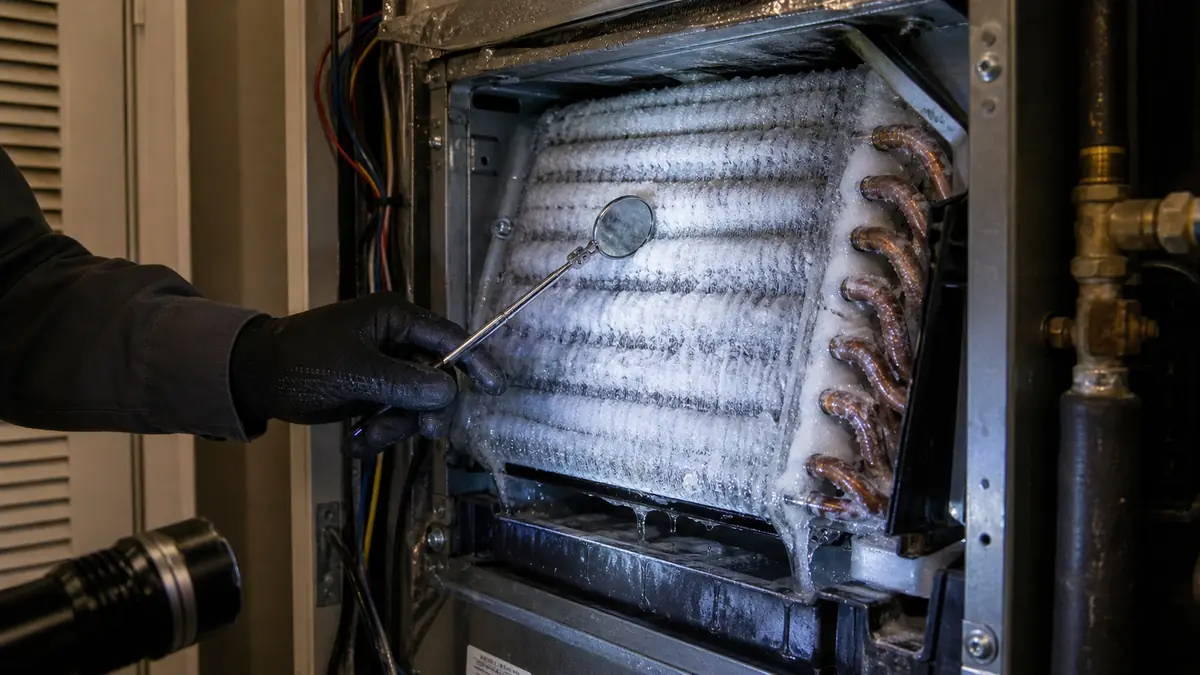
Airflow or refrigerant - which is freezing your coil?
Both problems chill the coil below 32 F so condensation turns to ice, but the fix is opposite. Restricted airflow means the coil cannot shed its cold into the passing air; low refrigerant means the pressure in the coil drops too far. We measure superheat and check airflow to separate them, because adding refrigerant to an airflow problem - or sealing ducts on a leaking system - wastes your money.
| Root cause | Telltale | Fix lane |
|---|---|---|
| Dirty filter / coil | Visible buildup, low airflow at vents | $150 - $600 |
| Undersized / leaky ducts | High static pressure, repeat freeze | $800 - $3,100 |
| Weak blower / ECM motor | Low CFM, motor fault | $450 - $2,300 |
| Low refrigerant (leak) | High superheat, oil at joints | $225 - $1,500 |
What should you do before we arrive?
- Set the thermostat to off (cooling), and the fan to on - this thaws the ice safely.
- Swap a dirty filter for a clean one of the same size and rating.
- Make sure supply and return registers are open and not blocked by furniture.
- If it freezes again after thawing, stop running it and book a diagnostic - the cause is mechanical.
Why do Pasadena bungalows freeze coils so often?
The repeat-freeze homes we see cluster in the pre-war districts. A 1920s Craftsman in Bungalow Heaven or Historic Highlands often has a single small return and undersized trunk that simply cannot feed a modern coil enough air. Until the duct system is sealed and right-sized, the coil keeps icing no matter how good the Trane condenser is. For the airflow side of the same story, see weak airflow from vents; for a neighborhood-specific walkthrough, see frozen coil in Historic Highlands.
How we separate an airflow freeze from a refrigerant freeze
The two causes look identical from the hallway - ice on the coil, weak cold air, water on the floor when it thaws - so we measure rather than guess. The reading that splits them is superheat, the temperature difference between the refrigerant leaving the coil and its saturation temperature.
- Thaw the coil fully so readings are valid, then restart in cooling and let it stabilize for 10 to 15 minutes.
- Measure total external static pressure across the air handler. High static with normal charge is an airflow problem - dirty coil, filter, or duct.
- Read superheat and subcooling at the service ports. High superheat with low pressures points to undercharge or a leak, not airflow.
- If airflow is the culprit, we restore it (clean, replace filter, correct the return) and confirm the coil holds above freezing.
- If the charge is low, we leak-search with an electronic detector or nitrogen pressure test - flare joints, the line set, and the coil are the usual leak points - repair, evacuate, and weigh in the correct R-410A charge.
Adding refrigerant to an airflow problem, or sealing ducts on a leaking system, wastes money and the coil freezes again within days. The measurement is what keeps the fix permanent.
What is safe to do yourself, and what needs a tech
Safe homeowner steps: switch cooling off and the fan on to thaw, swap a dirty filter, open blocked registers, and clear debris off the outdoor coil with the power off. Leave the rest to a tech. The capacitor stores a dangerous charge, refrigerant work requires EPA certification and recovery equipment, and chipping ice off a coil can puncture the thin aluminum and create a leak. If the coil freezes again within a day of thawing, stop running the system - liquid refrigerant returning to the Climatuff compressor on a flooded suction line is what destroys it.
Common questions about a frozen Trane coil in Pasadena
My Trane AC coil is frozen - what do I do right now?
Turn the cooling off at the thermostat but leave the fan on to thaw the ice, and replace a dirty filter. Running a frozen system can slug liquid back to the compressor and damage it. Once it thaws, if it freezes again, it needs a diagnostic - the cause is airflow or refrigerant, not the cold setting.
Does a frozen coil mean I am low on refrigerant?
Sometimes, but not always. Low refrigerant from a leak drops coil temperature below freezing, but so does restricted airflow from a dirty coil, clogged filter, or undersized duct. We measure superheat and airflow to tell the two apart before adding refrigerant, because topping off a leaking system just delays the real fix.
Why does this keep happening in my older Pasadena home?
Older Pasadena homes often have undersized 1920s ductwork and small returns that starve the coil of airflow, the leading non-refrigerant cause of freezing. The bungalow stock in Historic Highlands and Bungalow Heaven is especially prone to it. Sealing or resizing the ducts usually solves a repeat freeze.
How long does a frozen Trane coil take to thaw?
With cooling off and the blower running, a fully iced coil usually thaws in 1 to 3 hours; a heavy ice block can take longer. Do not chip at it or use a heat gun - you can puncture the thin aluminum Spine Fin or evaporator tubing and turn an airflow problem into a refrigerant leak. Let it melt, catch the drip, then book the diagnostic.
What does it cost to fix a frozen coil in Pasadena?
An airflow fix - cleaning the coil and filter or correcting a return - runs about $150 to $900. A refrigerant leak repair plus recharge runs $225 to $1,500 depending on whether the leak is a flare joint, the line set, or the coil itself. The diagnostic is about $79 to $200 and is credited toward an approved repair.