Pasadena HVAC Maintenance Calendar
Learn - maintenance calendar - updated 2026-06-13
Quick answer: Service a Trane's cooling side each spring before Pasadena's Zone 9 heat, change filters every one to three months, and clear the condenser before fall Santa Ana winds. Pasadena Trane HVAC tunes up systems from Linda Vista (91105) to Hastings Ranch; call (213) 277-6575 or book online to schedule.
At a glance
- Service the AC/heat-pump cooling side once a year, ideally in spring.
- Change a 1-inch filter every 1-3 months; more often in smoke or pollen.
- Pasadena sees ~25-40 days a year above 90 F, with Santa Ana spikes past 100 F.
- Clear leaves and debris from the outdoor condenser before fall winds.
- A weak capacitor caught in spring prevents a no-cool call in July.
- Tune-up does not require a maintenance plan. Hours: Open 6:30am-8pm weekdays, 8am-5pm weekends.
- Independent - not a Trane dealer.
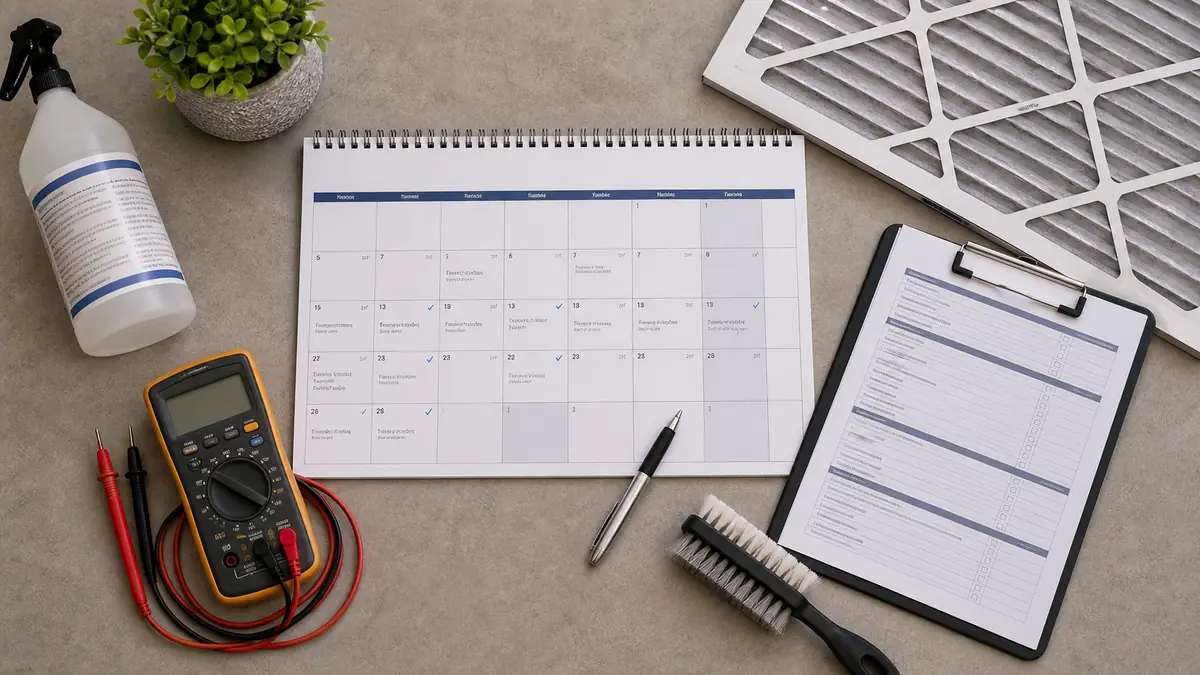
Why does Pasadena need its own maintenance rhythm?
A maintenance calendar built for a cold Midwest city gets the seasons backward for us. Pasadena is cooling-dominant: the cooling system carries the heavy load from late spring through October, and the furnace works only a few mild weeks. So the priority is keeping the condenser, coil, and capacitor healthy before summer, not winterizing a heating plant. Add fire-season smoke and fall Santa Ana winds, and the timing of each task shifts to match the local calendar.
What should I do each season?
| Season | Do yourself | Have a pro check |
|---|---|---|
| Late winter / early spring | New filter, clear plants 2 ft from condenser | Capacitor, contactor, refrigerant charge, coil clean - before the heat |
| Summer | Filter monthly, watch for weak airflow or icing | Diagnose any short cycling, no-cool, or high bills promptly |
| Fall (Santa Ana) | Clear leaves/debris from the outdoor unit, new filter | Condenser fan, coil, and electrical before wind/heat spikes |
| Winter | Filter check, listen for furnace lockouts | Furnace flash-code check, igniter, flame sensor, heat exchanger |
Month by month: a Zone 9 Pasadena calendar
The seasonal table sets the rhythm; this breaks it into the months that matter on the Pasadena valley floor, where the cooling season runs long and the heating season is short and mild.
- January: Heating is in its only real stretch. Run the furnace, listen for it failing to light or cycling on a lockout, and read the integrated furnace control LED if it flashes - 4 flashes is an open high-limit (often a dirty filter), 3 flashes is a pressure-switch or inducer fault. Change the filter.
- February: A good window for a furnace check before you forget about heat for the year - hot-surface igniter, flame sensor, and a heat-exchanger inspection, especially on older 80 percent units.
- March: Cooling prep begins. Clear winter leaf litter and any plants back to two feet from the outdoor condenser so the Spine Fin coil can breathe. Replace the filter.
- April: Book the spring cooling tune-up now, before the first heat. This is the highest-value visit of the year - capacitor, contactor, charge, and coil - and April booking beats the May rush.
- May: First warm days. Run the AC for a full cycle and watch for weak airflow, ice on the line set, or short cycling; catching it now is a scheduled repair, not a July emergency.
- June through August: Peak load. Change the filter monthly because dust and pollen load it fast, keep two feet of clearance around the condenser, and call at the first sign of trouble rather than running a struggling system through a 95 F week.
- September: Still hot, and fire season is active. Swap to a fresh filter if wildfire smoke has loaded the old one, and rinse heavy dust off the condenser coil with the power off.
- October: Santa Ana season. Strong, dry winds blow debris into the outdoor unit right as a late heat spike arrives. Clear the unit, check the coil, and confirm the system is ready for one more push.
- November: The brief shoulder season. Test the furnace on the first cold morning so a no-heat surfaces on a mild day, not the coldest night.
- December: Filter check and a listen to the furnace under steady use; address any flash-code faults before a holiday cold snap.
What does a spring tune-up actually catch?
The single highest-value visit is the spring cooling tune-up, because it catches the parts that strand Pasadena homeowners in July. We test the run capacitor's microfarads against its rating - the part most likely to fail in the heat - inspect the contactor for pitting, read suction and liquid pressures to confirm the charge, and clean the Spine Fin and evaporator coils so airflow stays up. A weak capacitor found in April is a $30 part; the same failure on a 100 F Saturday is an emergency call. For the failures we see when maintenance is skipped, read short cycling and frozen coil.
How does the old housing stock change maintenance?
In Pasadena's pre-war districts, the filter and duct story is bigger than the equipment story. Craftsman bungalows in Bungalow Heaven and Historic Highlands often have a single undersized return, so a dirty filter chokes airflow faster and freezes the coil sooner than in a newer home. We recommend more frequent filter changes for these homes and, where freezing repeats, a look at the ductwork rather than endless recharges. Right-sizing on replacement, covered in the Manual J guide, also reduces the maintenance burden.
What a Pasadena furnace needs, even in a mild winter
Heating runs only a few weeks here, which lulls homeowners into skipping it - then the furnace fails on the first cold morning because it sat idle and dusty for ten months. A short annual heating check still matters. We clean or replace the hot-surface igniter if it is glazing, clean the flame sensor (a dirty sensor is the most common no-heat lockout, surfacing as 8 flashes on the Trane control), test the pressure switch and inducer, and on 80 percent and older units inspect the heat exchanger for cracks. If the control board flashes 5 (flame sensed when none should be) or 6 (reversed polarity or poor grounding), those are wiring and safety issues worth catching on a 60 F day rather than a 38 F night. Because SoCal winters are mild, an 80 percent furnace is often perfectly adequate here, but adequate still means maintained.
What is on our spring tune-up checklist?
So you know what you are paying for, here is what a cooling tune-up on a Pasadena Trane covers - the measurements, not just a spray-and-pray rinse:
- Run capacitor: metered in microfarads against its rating; a cap that has drifted out of tolerance is the single most common SoCal-heat failure and the cheapest to catch early.
- Contactor: inspected for pitting and burning that causes hard starts and eventual no-cool.
- Refrigerant charge: suction and liquid pressures with superheat and subcooling, to confirm the charge and flag a slow leak before it strands you.
- Coils: the all-aluminum Spine Fin outdoor coil and the indoor evaporator cleaned so airflow and heat transfer stay up.
- Blower and airflow: ECM blower operation and total external static pressure, which on old Pasadena ducts is often the hidden problem.
- Electrical and controls: tightened connections, plus any plain-language alerts on a ComfortLink II XL824 or XL850, or flash codes on a non-communicating control.
- Drain: condensate line and pan cleared so a clog does not trip a float switch and shut cooling down on the hottest day.
Does a heat pump change the calendar?
A bit. A Trane heat pump like an XV18 or an XR-series heat pump both cools in summer and heats in the mild Pasadena winter, so it runs more hours across the year than a cooling-only AC paired with a gas furnace. That means the spring cooling tune-up still leads, but the heat pump also deserves a quick fall check of its heating mode and defrost cycle before the cold weeks. Filter discipline matters even more on a heat pump because it runs year-round; a choked filter hurts both seasons. The reversing valve, defrost control, and outdoor coil are the heat-pump-specific items we add to the checklist. For the equipment itself, see the Trane heat pump lineup.
Which tasks are safe to do yourself?
Plenty of this calendar is homeowner work, and doing it cuts your repair calls. Safe DIY: changing the filter on schedule, keeping two feet of clearance and rinsing loose debris off the outdoor coil with the power off, opening and unblocking registers, and watching for early warning signs (weak airflow, ice, short cycling, odd smells). Leave to a tech anything involving the capacitor, which stores a dangerous charge even with the power off; refrigerant, which requires EPA certification and recovery gear; gas and combustion components; and electrical at the contactor or board. The dividing line is simple - cleaning and observing is yours, measuring and repairing is ours.
When does maintenance turn into replacement?
Upkeep stretches a system's life, but it cannot hold off the end forever. Once a unit older than 12 years starts stacking up repairs, leaking R-410A, or losing a major part like the Climatuff compressor, the yearly tune-up stops being the right place to put your money - a planned replacement is. We will flag that line for you instead of selling one more patch. The repair-or-replace math sits on our home page and rolls into an AC installation decision. The efficiency upgrade and any rebate questions belong on the SEER2 and rebates guide.
The bottom line on Pasadena HVAC maintenance
Pasadena is cooling-dominant, so the calendar leans on the cooling side: book one spring tune-up before the Zone 9 heat, change the filter every one to three months and more often during fire-season smoke or pollen, and clear the outdoor condenser before fall Santa Ana winds drive debris into it. The single highest-value visit is the spring check, because a weak capacitor caught in April is a cheap part instead of a 100 F Saturday emergency. Keep the furnace on a short annual check even though it runs only a few weeks, and watch the old-stock filter and duct story closely in the pre-war districts, where airflow problems freeze coils first. None of this requires a maintenance contract - just a rhythm tuned to this climate, and a tech who measures rather than guesses.
Common questions about HVAC maintenance in Pasadena
How often should a Trane AC be serviced in Pasadena?
Once a year, ideally in spring before the cooling season, because Pasadena's long hot summer puts heavy hours on the condenser. A spring tune-up checks the capacitor, contactor, refrigerant charge, and coil so the system is ready before the first Santa Ana spike past 100 F.
How often should I change my filter in a Pasadena home?
Every one to three months for a standard 1-inch filter, more often during fire-season smoke or heavy pollen. A clogged filter is the leading cause of frozen coils and high-limit trips here, and it is the cheapest thing you can do to protect the system.
Do I need to do anything before fire and Santa Ana season?
Yes. Before fall Santa Ana winds, clear leaves and debris from the outdoor condenser, check that the coil is clean, and replace the filter. High winds and smoke load the system right when it is asked to cool through a heat spike.
Is a maintenance plan worth it for a single-stage XR?
An annual visit is worth it on any system, but especially on hard-run Pasadena units. For a single-stage XR, the value is catching a weak capacitor or low charge before it strands you on a 95 F day. We do not require a plan to do a tune-up.